Knowing when to get tested after STD exposure is one of the most common questions people have — and one of the most important. Testing too early can produce a false negative, not because the test failed, but because every infection has a window period: the time between exposure and when a test can reliably detect it. This guide walks through the window period for every major STD so you know exactly when your results will be accurate.
What Is a Testing Window Period?
A window period is the gap between exposure to an infection and the point when a test can detect it. During this time, you may have an infection that a test cannot yet pick up. Testing before the window period closes can give a false negative — a result that says negative even though an infection is present.
Different tests work in different ways. Some detect the actual bacteria or virus (like NAAT tests for chlamydia). Others detect antibodies your immune system produces in response to an infection. Antibody-based tests tend to have longer window periods because your body takes time to build a detectable immune response.
The window period also varies by STD. Chlamydia and gonorrhea have relatively short windows. HIV and herpes have longer ones. Understanding these differences helps you choose the right time to test so your results actually mean something.
For a broader look at timing across all infections, the STD testing timeline chart lays out each window period side by side in an easy-to-read format.
STD Window Periods at a Glance
The table below covers the most commonly tested STDs, the type of test used, and the earliest reliable testing window. These are general guidelines — individual factors like immune response and test sensitivity can affect accuracy.
| STD | Test Type | Earliest Reliable Testing Window | More Information |
|---|---|---|---|
| HIV (4th gen) | Antigen/Antibody | 18–45 days | HIV testing window period |
| HIV (RNA/NAT) | RNA detection | 10–33 days | HIV RNA test window |
| Chlamydia | NAAT | 7–14 days | chlamydia window period |
| Gonorrhea | NAAT | 5–7 days | gonorrhea testing window |
| Syphilis | Antibody (treponemal) | 3–6 weeks | syphilis window period |
| Herpes (HSV-1/2) | IgG Antibody | 12–16 weeks | herpes window period |
| HPV | DNA (cervical) / visual | 3 weeks–3 months | HPV window period |
| Hepatitis B & C | Antibody / Antigen / RNA | 6 weeks–6 months | hepatitis B and C window period |
| Trichomoniasis | NAAT / Wet prep | 5–28 days | trichomoniasis window period |
Window Periods by STD — What You Need to Know
HIV
HIV has one of the more complex testing landscapes because the type of test you take changes how early you can get a reliable result. The most widely used option is the 4th generation test, which detects both HIV antibodies and the p24 antigen. Most people who have HIV will test positive on this test within 18 to 45 days of exposure, with 45 days being the point at which accuracy is very high for most people.
The 4th generation HIV test accuracy page goes deeper into sensitivity rates and what a negative result at different time points actually means.
For the earliest possible detection, an RNA (NAT) test can detect HIV in the blood as early as 10 days after exposure, though the window extends to about 33 days for reliable results. This test is typically used in specific circumstances rather than routine screening. If you’re on PrEP, testing timing works a little differently — the STD testing window period on PrEP page covers what that looks like.
Chlamydia
Chlamydia testing uses NAAT (nucleic acid amplification testing), which detects genetic material from the bacteria itself rather than your immune response. This means the window period is shorter than antibody-based tests. Most labs recommend waiting at least 7 days after exposure, with the most reliable results coming at the 14-day mark.
Testing at 7 days is possible, and some people will get an accurate result then — but bacterial load may still be low enough in some cases to miss detection. Waiting until the two-week mark gives the test the best chance of catching an infection if it’s there.
Gonorrhea
Like chlamydia, gonorrhea is detected using NAAT testing and has a relatively short window period. The bacteria replicate quickly, which means detectable levels are typically present within 5 to 7 days of exposure. Of the common bacterial STDs, gonorrhea has one of the earliest reliable testing windows.
Syphilis
Syphilis testing relies on antibody detection, so the window period is longer — typically 3 to 6 weeks after exposure. Some people produce detectable antibodies closer to 3 weeks, but for a confident negative result, waiting until the 6-week mark is generally recommended. A confirmatory test is often used alongside the initial screening test.
Herpes (HSV-1 and HSV-2)
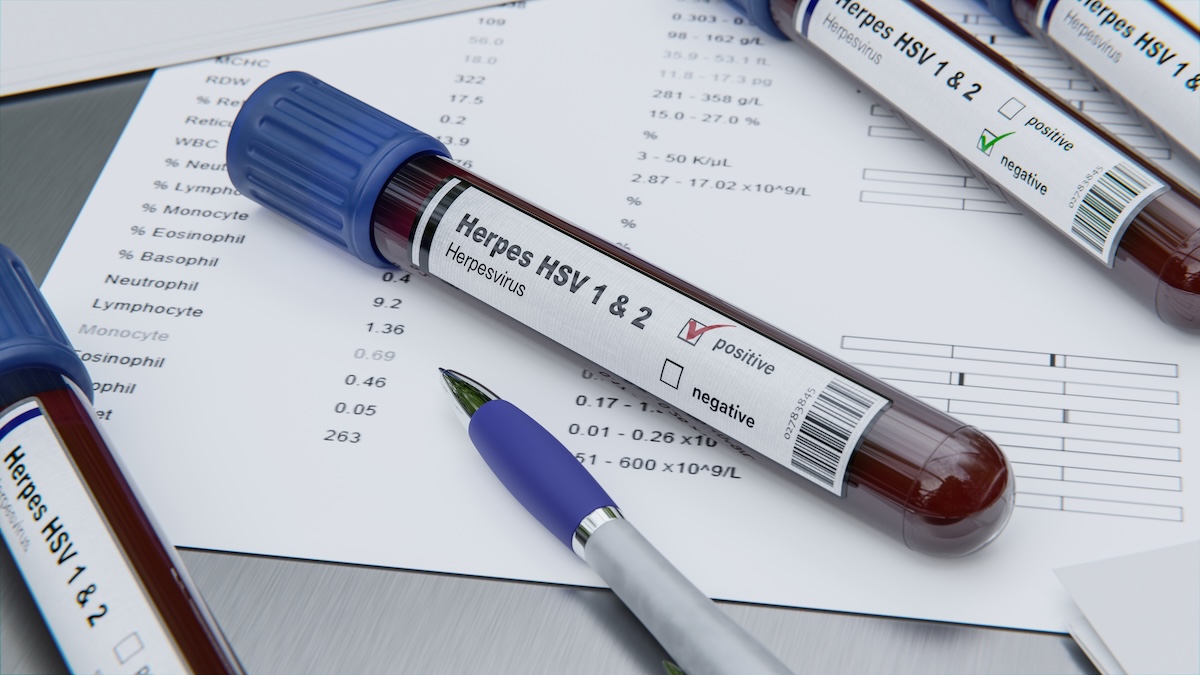
Herpes has one of the longest window periods of any commonly tested STD. Blood tests for herpes detect IgG antibodies, and it takes time — often 12 to 16 weeks — for those antibodies to reach levels a test can reliably measure. Some people may not produce detectable antibody levels for up to 6 months.
This is why a herpes test taken shortly after exposure may not be reliable even if the result is negative. If you’ve had a potential exposure and a recent negative result, retesting at the 12-to-16-week mark gives a more accurate picture.
HPV
HPV testing works differently from most other STD tests. For people with a cervix, HPV DNA testing is done as part of cervical cancer screening (Pap/HPV co-test), not as a standalone post-exposure test. For people without a cervix, there’s currently no approved diagnostic test for HPV — the infection is identified visually if warts appear. The time from exposure to visible warts, if they develop, can range from 3 weeks to several months.
Hepatitis B and C
Hepatitis B can be detected using antigen testing as early as 6 weeks after exposure, though antibody tests may take longer. Hepatitis C antibody tests are generally accurate at 8 to 11 weeks, with some guidelines recommending a confirmatory test at 6 months for a definitive negative. RNA tests for hepatitis C can detect the virus earlier — around 1 to 2 weeks after exposure — but are not used for routine screening.
Trichomoniasis
Trichomoniasis is caused by a parasite rather than a virus or bacterium. NAAT testing can detect trich from about 5 days after exposure, but the full window period extends to 28 days. For the most reliable results, testing around the 4-week mark is a reasonable approach.
Can You Get Tested 4 Days After Exposure?
For most STDs, 4 days after exposure is too early for accurate results. The one area where this timeline might apply is with very rapid-replicating bacterial infections — though even for gonorrhea, 5 to 7 days is the earliest reliable window, meaning 4 days is still on the early side.
HIV, syphilis, herpes, hepatitis, and HPV all have window periods measured in weeks or months. A test at 4 days post-exposure for any of these would not produce a reliable result.
If something happened very recently and you’re concerned, the most useful step at 4 days isn’t testing — it’s speaking with a healthcare provider about your options, particularly if HIV is a concern, where post-exposure considerations are time-sensitive.
Is 7 Days Too Early to Test for Chlamydia?
Seven days is technically within the detection window for chlamydia — NAAT testing may pick up an infection at this point in many cases. That said, bacterial load can still be relatively low in the first week, and there’s a small chance the test could come back negative even if an infection is present.
For the most accurate result, waiting until 14 days after exposure is the general recommendation. If you test at 7 days and get a negative result but had a clear exposure, retesting at the 2-week mark is a reasonable step. If you test positive at 7 days, that result is considered reliable and actionable.
Scenarios: When to Test Based on Your Situation
After Unprotected Sex With a New Partner
If you’ve had STD testing after unprotected sex and don’t know your partner’s status, the practical approach is to test for multiple infections at once. The timing depends on which infections you’re concerned about — a full panel approach usually means testing at two points: around 2 weeks post-exposure for chlamydia and gonorrhea, and again at 6 weeks or later for HIV, syphilis, and hepatitis.
You Had a Negative Result but Still Have Questions
A negative result can feel reassuring, but whether it’s conclusive depends on when you tested relative to the window period. If the test was done before the window closed, retesting makes sense. The page on what if I tested negative but am still worried walks through how to think about this clearly.
You Want to Know How Soon After Sex to Test
The answer depends on the specific infection. For a general overview of how soon after sex can you test for STDs, the key is matching the test timing to the window period — not just testing as quickly as possible.
Frequently Asked Questions
What happens if I test before the window period ends?
You may get a false negative — a result that shows negative even though an infection may be present. This doesn’t mean the test is wrong; it means the infection hasn’t yet reached detectable levels. Retesting after the window period closes gives a reliable result.
Do all STDs have the same window period?
No. Window periods range from about 5 days (gonorrhea) to 6 months (hepatitis C, herpes in some cases). The length depends on what the test detects — bacterial load, viral RNA, or antibodies — and how quickly your body responds to infection.
Does the window period differ between men and women?
For most STDs, the window period is similar regardless of biological sex. Some variation exists in how quickly symptoms appear, but test accuracy timelines are based on biological detection thresholds rather than sex differences.
Can I test for multiple STDs at the same time?
Yes. A full panel test covers multiple infections in one visit. Because different infections have different window periods, some results may be conclusive sooner than others. Your testing provider can help you understand which results are final and which may need a follow-up test.
What if I don’t know exactly when the exposure happened?
If you’re unsure of the exact date, using the conservative end of each window period gives the most peace of mind. For example, if you think exposure was somewhere between one and three weeks ago, testing now would be appropriate for chlamydia and gonorrhea, but you’d want to retest for HIV and syphilis at the 6-week mark to be confident in those results.
Does a negative test at 6 weeks mean I’m in the clear for HIV?
A negative result on a 4th generation HIV test at 45 days is considered highly accurate by most guidelines. At 6 weeks, the result is reliable for the vast majority of people. Some guidelines recommend a confirmatory test at 90 days for a definitive negative, particularly if there’s ongoing uncertainty. The HIV testing window period page covers this in more detail.
Is it possible to have an STD with no symptoms and still test positive?
Yes. Many STDs produce no noticeable symptoms, especially in the early stages. Chlamydia, gonorrhea, and trichomoniasis are often asymptomatic. HIV typically causes no symptoms after the initial acute phase. Testing is the only reliable way to know your status regardless of how you feel.
If you’ve had a potential exposure, understanding the window period takes away a lot of the guesswork. Test at the right time, and your results will actually tell you something meaningful. That’s what this guide is here to help with — so you can move forward with clarity.
Confidential, Private and Affordable STD Testing
Not sure when to test? Understanding your STD testing window period helps you get accurate results. When you're ready, find confidential STD testing clinics near you — same day appointments, no referral needed, results in 3 business days.