

HIV (human immunodeficiency virus) affects millions of people worldwide. While HIV can impact anyone, women may experience certain symptoms and complications that are unique or more pronounced. Recognizing early HIV symptoms in females — such as fever, fatigue, swollen lymph nodes, and recurrent infections — is critical for early diagnosis and treatment.
Because early HIV can resemble flu-like illness or other sexually transmitted infection symptoms, testing is the only way to know for sure. This guide explains early HIV symptoms in women, when to get tested, and what treatment looks like today.
Key Takeaways
- Early HIV symptoms often resemble the flu
- Some women experience no noticeable symptoms initially
- Testing is the only way to confirm HIV infection
- Early treatment dramatically improves long-term health outcomes
Understanding HIV and Its Stages
HIV attacks CD4 T cells, weakening the immune system and reducing the body’s ability to fight infections. Without treatment, HIV progresses through three stages.
Acute HIV Infection (Early Stage)
This stage occurs 2–4 weeks after exposure. The virus multiplies rapidly, and many people develop flu-like symptoms. Because these symptoms overlap with other viral illnesses — and even conditions like mononucleosis — HIV often goes undiagnosed during this phase.
Chronic HIV Infection
Also called clinical latency, this stage can last for years without noticeable symptoms. It is possible to have HIV without symptoms while the virus continues damaging the immune system.
AIDS
AIDS (acquired immunodeficiency syndrome) occurs when CD4 counts fall below 200. At this stage, the immune system is severely compromised and opportunistic infections become life-threatening.
Early Signs of HIV in Females
Early HIV symptoms are similar in men and women, but certain complications are more common in females.
Common Early HIV Symptoms
- Fever
- Extreme fatigue
- Swollen lymph nodes
- Sore throat
- Muscle aches
- Skin rash
- Night sweats
- Headache
These symptoms typically appear 2–4 weeks after exposure. If you’re unsure about timing, review how soon after exposure you can test for STDs to understand testing windows.
HIV Symptoms Specific to Women
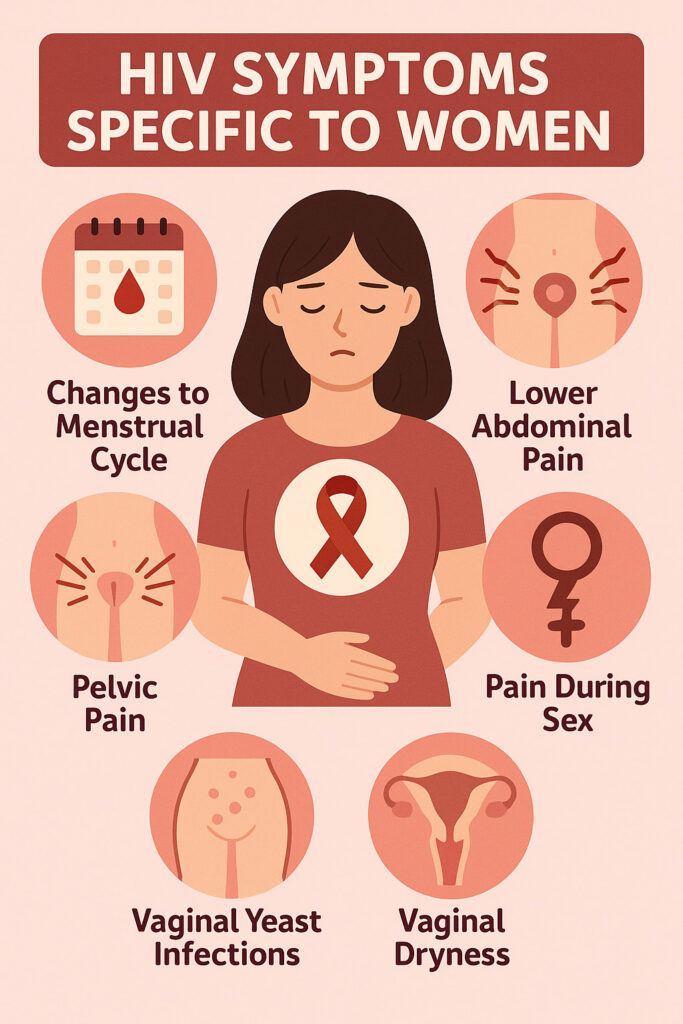
- Menstrual changes: Heavier, lighter, or irregular periods
- Recurrent vaginal yeast infections: Frequent infections may signal immune suppression
- Pelvic inflammatory disease (PID): Increased susceptibility to infection
- Persistent HPV infections: Higher risk of cervical cancer
- Bacterial vaginosis: More frequent or difficult to treat
Recurrent yeast infections may also warrant evaluation for conditions like female yeast infections versus immune-related causes.
When Should Women Get Tested for HIV?
- After unprotected sex
- After potential exposure to blood or needles
- When experiencing early HIV symptoms
- During pregnancy
- As part of routine health screening (at least once between ages 13–64)
If symptoms appear after sexual contact, testing is strongly recommended.
HIV Testing Options
Antibody Tests
Detect antibodies 23–90 days after exposure.
Antigen/Antibody Tests
Detect HIV 18–45 days after exposure.
Nucleic Acid Test (HIV RNA Test)
This test detects the virus itself and can identify infection as early as 10–33 days after exposure, sooner than antibody or antigen/antibody tests. If your exposure was recent, this is the test that can detect it soonest, and you can order it on its own as an HIV RNA Early Detection Test. For routine screening when an exposure wasn’t recent, a 10-panel STD test covers HIV alongside nine other infections.
If you’re unsure which test is appropriate, a healthcare provider can guide you based on timing and exposure risk.
Living with HIV: Treatment and Outlook
HIV is not curable, but it is highly treatable.
- Antiretroviral therapy (ART): Daily medication reduces viral load to undetectable levels
- Undetectable = Untransmittable (U=U): People with sustained undetectable viral load do not sexually transmit HIV
- Routine monitoring: Regular CD4 and viral load testing
- Mental health support: Counseling and support groups
With treatment, people with HIV can live normal life expectancies.
HIV Prevention Strategies
- Use condoms consistently
- Consider PrEP if at high risk
- Use PEP within 72 hours of potential exposure
- Get tested regularly
- Avoid sharing needles
Not Sure? Get Tested
Because early HIV symptoms overlap with many other conditions — including STD-related rashes and viral infections — testing provides clarity.
You can schedule a confidential test at a STD testing center near you with same-day appointments available in many locations.
FAQs
How early can HIV symptoms appear?
Symptoms typically appear 2–4 weeks after exposure.
Can HIV be cured if caught early?
No. HIV cannot be cured, but early treatment prevents progression to AIDS.
How early can HIV be detected?
An HIV RNA test can detect infection 10–33 days after exposure. Antibody tests may take up to 90 days.
Are weight loss and chest pain early symptoms?
Unexplained weight loss is more common in later stages. Chest pain is not typically an early symptom.
Confidential, Private and Affordable STD Testing
Not sure when to test? Understanding your STD testing window period helps you get accurate results. When you're ready, find confidential STD testing clinics near you — same day appointments, no referral needed, results in 1–2 business days.